
Customer expectations have changed. When someone calls a business, they usually don’t want to wait several hours for a response. They want an answer, a solution, or at least some direction as quickly as possible.
For service businesses, this can be difficult to manage. Teams may be busy helping existing customers, handling appointments, or working on other tasks. A missed call or delayed follow-up can easily turn into a missed opportunity.
This is where AI Voice Agents can make a real difference. Instead of relying entirely on someone from your team to answer every call, an AI Voice Agent can handle many routine conversations, collect information, answer common questions, and help customers take the next step.
When connected with GoHighLevel, these conversations can become part of a larger customer journey. Calls can connect with your CRM, appointments, follow-ups, and other business processes.
In this guide, we’ll look at what AI Voice Agents are, how they work with GoHighLevel, and where they can help service businesses improve customer communication.
If you’re new to What is GoHighLevel?, it’s useful to understand how the platform brings CRM, marketing, and customer communication together.
What You’ll Discover
In this guide, you’ll learn:
- What AI Voice Agents are and how they work with GoHighLevel.
- How AI Voice Agents can handle common customer conversations.
- Ways businesses can use AI Voice Agents to improve response times.
- How AI Voice Agents work with CRM, appointments, and automations.
- Common mistakes to avoid when using AI for customer calls.
- How to decide if AI Voice Agents are right for your business.
Let’s start with the basics: what exactly is an AI Voice Agent, and how is it different from the traditional phone systems businesses have used for years?
What Is an AI Voice Agent?
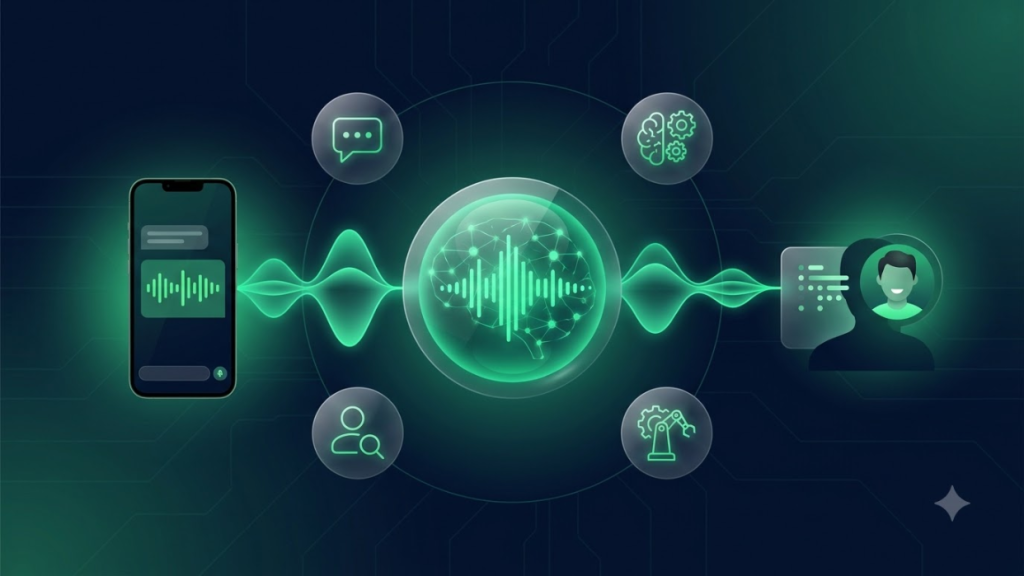
An AI Voice Agent is a system that can have voice conversations with customers over the phone. Instead of simply playing a recorded message or asking callers to press different numbers, it can understand what the caller is saying and respond based on the conversation.
For a service business, this can be useful when customers want quick answers, need to provide information, or want to schedule an appointment.
The important part is that the AI isn’t simply answering the phone. It can also help move the conversation forward and take the next appropriate action.
How AI Voice Agents Work
An AI Voice Agent can handle several parts of a typical customer conversation.
Answer incoming calls
The agent can respond when a customer calls instead of allowing every unanswered call to become a missed opportunity.
Understand customer questions
The agent can identify what the customer is asking and determine what information or action is needed.
Respond naturally
Rather than forcing customers through a long list of menu options, an AI Voice Agent can have a more conversational interaction.
Collect customer information
The agent can ask for information such as the customer’s name, contact details, service requirements, or preferred appointment time.
Take the next appropriate action
Depending on the conversation, the next step could involve scheduling an appointment, updating customer information, or passing the conversation to a member of the team.
AI Voice Agent vs Traditional IVR
Traditional IVR systems have been used by businesses for years. You call a number and hear something like, “Press 1 for sales, press 2 for support, and press 3 for billing.”
This approach works for certain situations, but it can become frustrating when customers don’t know which option to choose or need help with something that doesn’t fit neatly into a menu.
AI Voice Agents take a more conversational approach.
Instead of asking customers to navigate through several options, the system can understand the purpose of the call and respond accordingly.
The difference is particularly noticeable when customers have questions that require some context.
| Traditional IVR | AI Voice Agent |
| Relies on numbered menus. Follows predefined options. Requires customers to choose a department. Can be frustrating for more complex requests. | Allows conversational interactions. Understands customer questions. Can collect relevant information. Can help guide customers toward the next step. |
This doesn’t mean AI Voice Agents are always the better choice. Traditional IVR can still work well for businesses with simple, predictable call routing. The right option depends on the type of calls your business receives and how much interaction customers need.
How AI Voice Agents Work With GoHighLevel
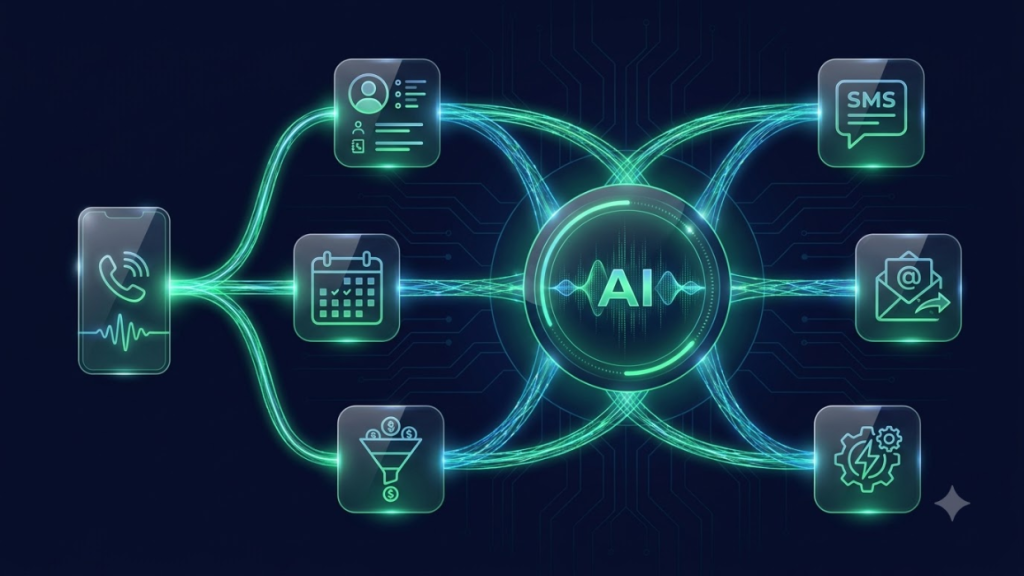
The real value becomes more interesting when an AI Voice Agent is connected to the rest of your business system.
Instead of treating the phone call as a separate interaction, GoHighLevel can connect customer conversations with CRM information, appointments, follow-ups, and sales pipelines.
This allows a call to become part of the customer’s overall journey rather than an isolated phone conversation.
CRM Integration
Your CRM contains important information about your leads and customers. Connecting voice conversations with your CRM can help keep that information organized.
For example, businesses can work with information such as:
- Contact information — Names, phone numbers, and other customer details.
- Conversation history — Previous interactions and relevant communication.
- Lead status — Whether someone is a new lead, qualified prospect, or existing customer.
- Custom fields — Business-specific information collected during the customer journey.
This gives your team a clearer picture of who the customer is and where they are in the sales process.
Automated Follow-Up
Not every customer interaction ends with an appointment or sale. Some people need additional information or simply aren’t ready to take the next step.
AI Voice Agents can work alongside follow-up automations for situations such as:
- Missed calls — Respond quickly when your team cannot answer.
- New leads — Start the next step after an initial inquiry.
- Unanswered inquiries — Continue communication when a customer hasn’t responded.
- Follow-up reminders — Keep potential customers from being forgotten.
The goal isn’t to keep contacting people endlessly. It’s to make sure legitimate inquiries receive timely and consistent communication.
Appointment Scheduling
For many service businesses, the most useful outcome of a customer call is getting an appointment on the calendar.
An AI Voice Agent can help make that process easier by working with your appointment system.
Depending on the setup, the process can include:
- Checking availability based on the business calendar.
- Booking appointments for available times.
- Rescheduling appointments when customers need to change their booking.
- Sending confirmations so customers know their appointment details.
This can reduce the back-and-forth that often happens when scheduling is handled manually.
Pipeline Updates
A phone conversation can also provide useful information about where a lead is in the sales process.
For example, after qualifying a prospect, the relevant opportunity can be updated in the pipeline. This gives the sales team better visibility into what happened during the conversation and what should happen next.
Pipeline-related actions can include:
- Qualifying leads based on information collected during the call.
- Updating opportunities with new customer information.
- Moving leads through pipeline stages as they progress.
- Notifying team members when a lead requires human attention.
This is where voice automation becomes more than simply “answering the phone.” When connected properly, the conversation can feed into the same processes your team already uses to manage leads and customers.
10 Ways AI Voice Agents Can Transform Customer Service
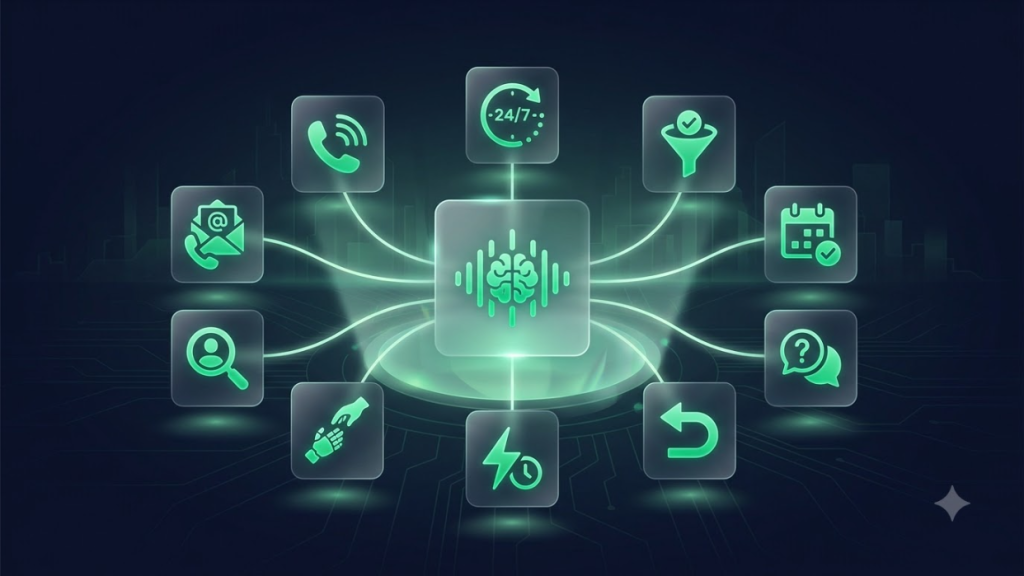
AI Voice Agents aren’t only useful for answering calls. When they’re connected to your CRM, calendar, and other business processes, they can help with many of the repetitive tasks that normally take up your team’s time.
Here are ten practical ways businesses can use them.
1. Answer Calls 24/7
Customers don’t always call during business hours. Someone may have a question in the evening, need information over the weekend, or want help with an urgent request.
An AI Voice Agent can provide an immediate response even when your team isn’t available.
- Handle after-hours calls
- Respond to weekend inquiries
- Handle initial urgent requests and route them appropriately
This gives customers a way to reach your business without having to wait until the next working day.
2. Respond to Missed Calls
A missed call doesn’t necessarily mean a lost customer. An AI Voice Agent can help businesses respond quickly when a team member isn’t available.
It can:
- Start an immediate callback
- Ask basic qualifying questions
- Help the customer book an appointment
A quick response can make a big difference when a potential customer is contacting several businesses at the same time.
3. Qualify New Leads
Not every lead has the same needs or level of interest. AI Voice Agents can ask a few relevant questions to understand what the prospect is looking for.
They can:
- Ask qualifying questions
- Collect customer requirements
- Identify prospects that may need immediate attention
Your team can then focus its time on conversations that are more likely to turn into real opportunities.
4. Book Appointments Automatically
Scheduling appointments can involve several back-and-forth messages or phone calls. An AI Voice Agent can make the process much simpler.
It can:
- Find available times
- Schedule appointments
- Confirm bookings
For businesses that rely heavily on consultations, appointments, or service visits, this can remove a lot of unnecessary administrative work.
5. Handle Common Customer Questions
Customers often call with questions that don’t require a member of your team to spend several minutes on the phone.
An AI Voice Agent can help answer common questions about:
- Services
- Pricing
- Availability
- Business hours
- Locations
This allows your team to spend more time handling conversations that actually require human attention.
6. Follow Up With Leads
Following up consistently is one of the most important parts of lead management, but it’s also something teams often struggle to do manually.
AI Voice Agents can help with:
- New inquiries
- Older leads
- Unresponsive prospects
- Quote follow-ups
Instead of letting leads sit untouched in your CRM, automated calls can help keep the conversation moving.
7. Reduce Waiting Times
Nobody enjoys sitting on hold or waiting hours for a response.
AI Voice Agents can provide an immediate first response, helping businesses reduce:
- Long hold times
- Delayed responses
- Unnecessary waiting
Even when a conversation eventually needs to be transferred to a team member, getting the customer started quickly can create a much better experience.
8. Route Important Calls to Your Team
Not every conversation should be handled entirely by AI. Some situations require experience, judgment, or a personal conversation.
An AI Voice Agent can identify calls that need human attention and help route them to the appropriate team member.
For example, it can:
- Identify complex requests
- Transfer calls when necessary
- Notify the right team member
This creates a practical balance between automation and human support.
9. Re-Engage Old Customers
Existing customers can become inactive for many reasons. Sometimes they simply forget to book their next appointment or haven’t needed a service recently.
AI Voice Agents can help bring those customers back by making check-in calls related to:
- Service reminders
- New offers
- Repeat appointments
- Customer check-ins
Re-engaging an existing customer can often be easier than starting from scratch with someone who has never interacted with your business.
10. Collect Customer Information
Before a team member speaks with a customer, having the right information can make the conversation much more productive.
An AI Voice Agent can collect details such as:
- Customer name
- Contact information
- Service requirements
- Preferred appointment time
That information can then be used to prepare your team for the next step in the customer journey.
AI Voice Agents for Different Industries
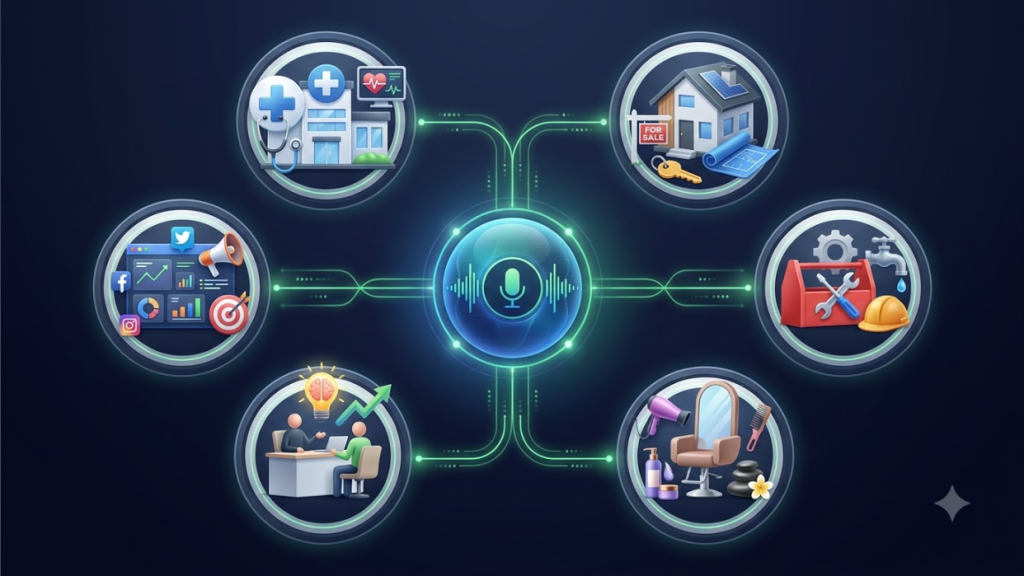
AI Voice Agents can be useful across many service industries, but the way they’re used depends on the business. A clinic has different customer needs than a real estate company or a home service provider.
Here are some practical examples.
Healthcare Clinics
For clinics, appointment-related communication can take up a significant amount of staff time.
AI Voice Agents can assist with:
- Appointment scheduling
- Appointment reminders
- Basic patient inquiries
- Follow-ups
For sensitive or complex matters, calls should be routed to the appropriate staff member rather than handled entirely through automation.
Real Estate
Real estate businesses often need to respond quickly to property inquiries and qualify potential buyers.
AI Voice Agents can help with:
- Property inquiries
- Lead qualification
- Showing appointments
- Buyer follow-ups
This can help agents spend more time with serious prospects rather than manually responding to every initial inquiry.
Marketing Agencies
Agencies often manage a steady flow of leads while also handling existing clients.
AI Voice Agents can assist with:
- Lead qualification
- Discovery call booking
- Client inquiries
- Lead follow-up
This can help agencies respond to prospects quickly while keeping their sales pipeline organized.
Home Service Businesses
Plumbers, electricians, contractors, cleaners, landscapers, and similar businesses often receive calls while their teams are out working.
AI Voice Agents can help handle:
- Quote requests
- Missed-call recovery
- Job scheduling
- Customer follow-ups
This means a technician doesn’t necessarily have to stop working just to answer every incoming call.
Coaches & Consultants
For coaches and consultants, the first conversation often determines whether a prospect moves forward.
AI Voice Agents can assist with:
- Consultation booking
- Lead qualification
- Follow-up calls
- Client inquiries
The AI can handle the initial steps while the coach or consultant focuses on conversations that require their expertise.
Salons & Spas
Appointments and repeat bookings are central to salons and spas, making voice automation particularly useful.
AI Voice Agents can help with:
- Appointment booking
- Rescheduling an Appointment
- Reminder calls
- Rebooking campaigns
This can reduce the amount of time staff spend on the phone while helping keep appointment calendars full.
AI Voice Agents + GoHighLevel Automations
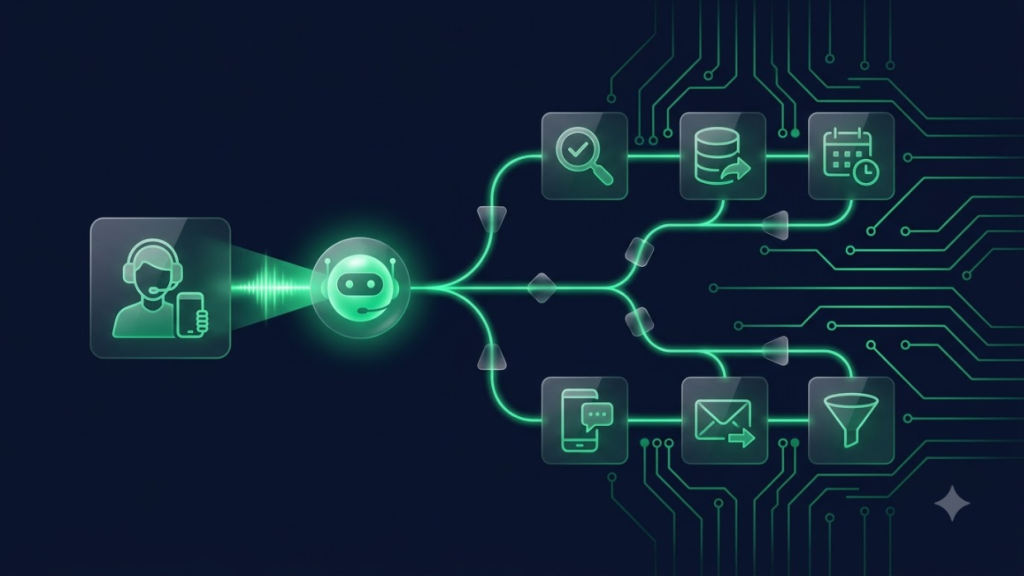
An AI Voice Agent becomes much more useful when it isn’t working on its own. When connected with GoHighLevel automations, a phone conversation can trigger other actions across your CRM, calendar, and customer communication.
For example, a customer might call your business, speak with the AI, provide some basic information, and then automatically receive a booking link or have an appointment scheduled. Your team can also be notified when the conversation needs human attention.
Trigger a Voice Call
A voice call can be triggered by different customer actions or changes in your sales process.
Common triggers include:
- New lead — Call a prospect shortly after they submit an inquiry.
- Missed call — Automatically respond when your team couldn’t answer.
- Form submission — Follow up with someone who has requested information.
- Pipeline change — Contact a lead when they reach a specific stage in your sales process.
The important thing is to choose triggers that make sense for your customer journey rather than calling customers every time something changes.
Take Action After the Call
The conversation doesn’t have to end when the call does. GoHighLevel can use the outcome of the interaction to trigger the next step.
For example, you can:
- Send an SMS
- Send an email
- Update the CRM
- Create a task for your team
- Book an appointment
This helps turn a simple phone conversation into a complete follow-up process.
Create a Complete Customer Journey
Think about what happens when someone contacts your business for the first time.
Instead of your team manually handling every step, the process can be connected:
Inquiry → AI Call → Qualification → Appointment → Reminder → Follow-Up
The AI handles the initial conversation, the CRM keeps the customer’s information organized, the calendar manages the appointment, and automations take care of the follow-up.
That’s where AI Voice Agents can become a useful part of your overall customer service system rather than just another phone-answering tool.
Benefits of AI Voice Agents for Businesses

When used for the right tasks, AI Voice Agents can improve both customer communication and internal efficiency.
Faster Response Times
Customers don’t have to wait for someone from your team to become available before receiving an initial response.
More Leads Contacted
Your team may only have time to contact a certain number of leads each day. An AI Voice Agent can help handle more initial conversations without adding the same amount of manual work.
Fewer Missed Opportunities
Missed calls and unanswered inquiries can quickly become lost business. Automated responses help make sure potential customers aren’t simply forgotten.
Reduced Manual Work
Routine conversations, appointment requests, and basic follow-ups can be handled automatically, giving your team more time for higher-value work.
Better Customer Experience
Customers get faster responses and can often get answers or complete simple tasks without waiting for a team member.
More Consistent Follow-Up
Instead of relying on someone to remember every follow-up, automation can keep communication consistent throughout the customer journey.
24/7 Availability
An AI Voice Agent can continue handling appropriate calls outside normal business hours, giving customers another way to reach your business when your team isn’t available.
What AI Voice Agents Shouldn’t Handle Alone

AI can handle many routine conversations, but that doesn’t mean every customer interaction should be completely automated.
There are situations where a human should remain involved.
Complex Complaints
Customers who are frustrated or dealing with complicated problems may need a person who can understand the situation and make the right decision.
Sensitive Customer Situations
Some conversations require empathy, discretion, or personal attention that is better handled by a trained team member.
Negotiations
Pricing negotiations, contract discussions, and other situations that require judgment should generally be handled by a human.
Highly Specific Technical Questions
If a question falls outside the information available to the AI, transferring the conversation to someone with the right expertise is a better option.
Requests Requiring Human Judgment
Some situations simply don’t fit into a predefined process. Your system should recognize when human involvement is needed rather than trying to force every conversation through automation.
The goal isn’t to replace your team with AI. A better approach is often human + AI: let AI handle repetitive and predictable conversations while your team focuses on situations that require experience, judgment, and personal attention.
Common AI Voice Agent Mistakes
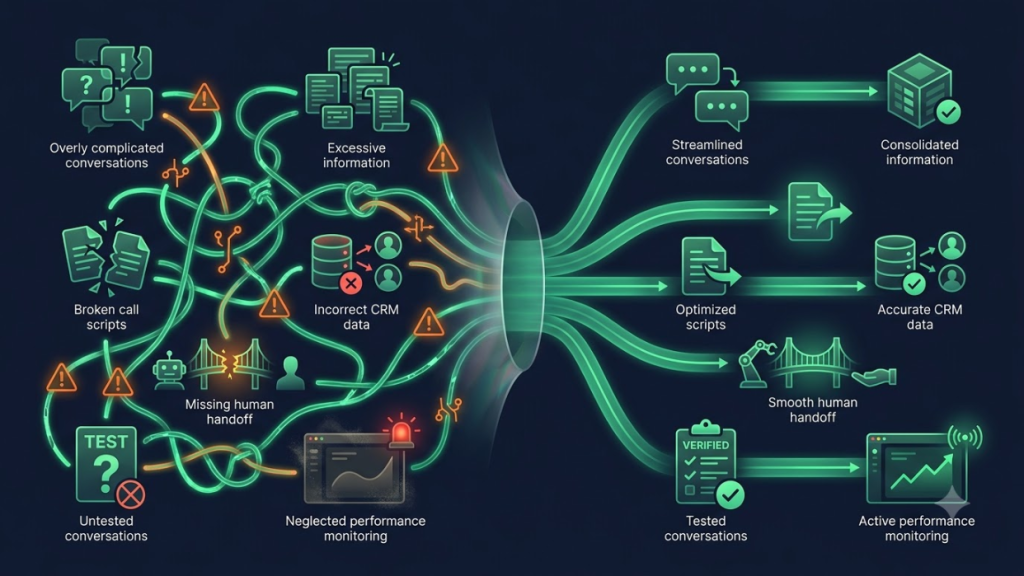
AI Voice Agents can save a lot of time, but the results depend heavily on how they’re set up. A poorly planned system can create more problems than it solves.
Making the Conversation Too Complicated
Don’t try to create a conversation that covers every possible situation. Start with a clear purpose and a small number of common customer scenarios.
Giving the AI Too Much Information
More information isn’t always better. Give the AI the information it actually needs to handle its role effectively and keep the conversation focused.
Poor Call Scripts
A call that sounds overly robotic or follows an unnatural script can frustrate customers. The conversation should feel simple, helpful, and appropriate for your audience.
Incorrect CRM Data
If customer information in your CRM is outdated or incomplete, the AI may not have the right context when interacting with a customer.
No Human Handoff
Always provide a clear way for the AI to involve a team member when a conversation becomes too complex or falls outside its role.
Not Testing Conversations
Don’t launch an AI Voice Agent without testing different scenarios. Try common questions, unusual requests, interruptions, appointment changes, and requests to speak with a person.
Forgetting to Review Call Results
Launching the system isn’t the end of the process. Review conversations regularly to identify where customers are getting confused and where the AI needs improvement.
How to Set Up an AI Voice Agent in GoHighLevel
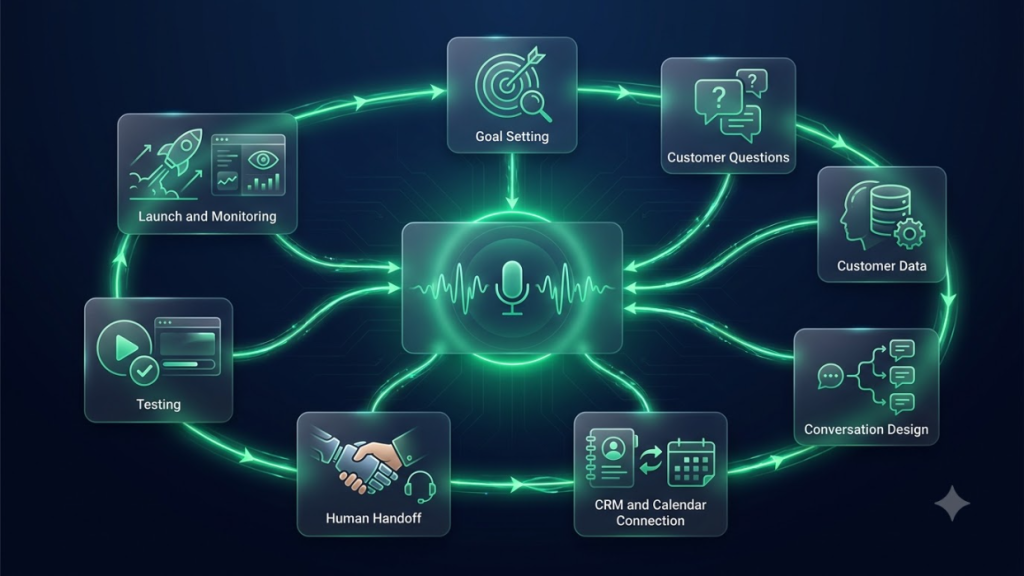
A successful setup starts with the business process, not the technology. Before building anything, decide exactly what you want the AI Voice Agent to accomplish.
Step 1: Define the Goal
Start with one clear objective.
For example, your first goal might be to answer missed calls and help qualified leads book appointments.
Step 2: Identify Common Customer Questions
Think about the questions your team answers repeatedly. These can form the foundation of your AI’s conversations.
Step 3: Prepare Your Customer Data
Make sure your CRM contains accurate contact information, services, pipeline stages, appointment details, and other information the AI may need.
Step 4: Create the Conversation Flow
Plan how the conversation should move from the initial greeting to qualification, answering questions, booking an appointment, or transferring the call.
Step 5: Connect Your CRM and Calendar
Connect the AI experience with the systems your team already uses so customer information and appointments remain organized.
Step 6: Set Up Human Handoff
Define when the AI should stop handling the conversation and involve a team member.
Step 7: Test Different Scenarios
Test normal conversations as well as unexpected questions and edge cases. Make sure the AI responds correctly and that the right actions happen afterward.
Step 8: Launch and Monitor Performance
Once everything works as expected, launch the system and continue reviewing its performance. Use real conversations to identify opportunities for improvement.
Metrics to Track
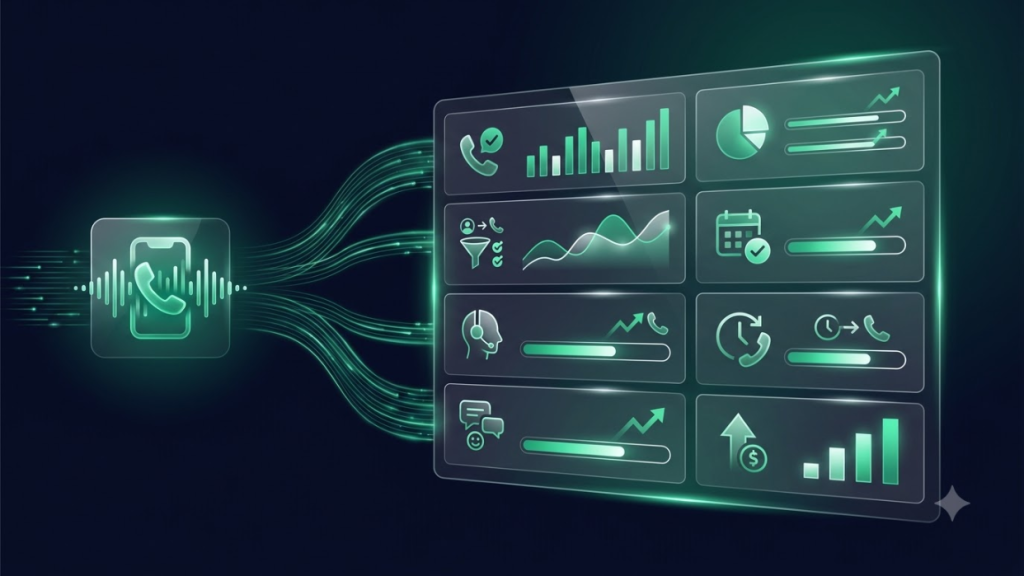
Simply having an AI Voice Agent doesn’t tell you whether it’s actually helping your business. Track the results that matter to your customer journey.
Calls Answered
How many incoming calls were successfully handled by the AI?
Leads Contacted
How many potential customers were reached through automated calls?
Lead Qualification Rate
How many conversations resulted in leads being identified as qualified prospects?
Appointments Booked
Track how many appointments were scheduled through the AI experience.
Calls Transferred to Staff
This can help you understand how often customers need human assistance and whether your handoff process is working properly.
Missed-Call Recovery Rate
Measure how many missed calls turn into meaningful conversations or appointments after automated follow-up.
Customer Response Rate
Look at how often customers respond to calls, SMS messages, or follow-up communication.
Conversion Rate
Ultimately, the most important question is whether these conversations are helping your business generate more customers and revenue. Track how many qualified conversations eventually turn into actual business.
Frequently Asked Questions
What is an AI Voice Agent?
An AI Voice Agent is a system that can have voice conversations with customers over the phone. It can answer questions, collect information, qualify leads, schedule appointments, and take other actions based on how the conversation is set up.
How does an AI Voice Agent work with GoHighLevel?
An AI Voice Agent can work alongside GoHighLevel’s CRM, calendar, pipelines, and automations. Information collected during a call can be used to update customer records, schedule appointments, trigger follow-ups, or notify your team.
Can AI Voice Agents answer calls 24/7?
Yes. AI Voice Agents can handle appropriate incoming calls outside normal business hours, including evenings and weekends. This gives customers a way to get an immediate response when your team isn’t available.
Can AI Voice Agents book appointments?
Yes. When connected to your appointment system, an AI Voice Agent can check available times, schedule appointments, and send confirmations.
Can an AI Voice Agent qualify leads?
Yes. It can ask predefined qualifying questions, collect information about the customer’s needs, and help identify leads that may require immediate attention from your team.
Do AI Voice Agents replace customer service teams?
Not necessarily. AI Voice Agents are best used to handle repetitive and predictable conversations while allowing your team to focus on complex, sensitive, or high-value customer interactions. In many cases, AI + human support provides a better experience than relying entirely on either one.
Final Thoughts
AI Voice Agents can take care of many repetitive customer conversations, from answering basic questions and responding to missed calls to qualifying leads and scheduling appointments.
The biggest advantage is often speed. Customers can receive a response without waiting for someone from your team to become available, which can help businesses capture opportunities that might otherwise be missed.
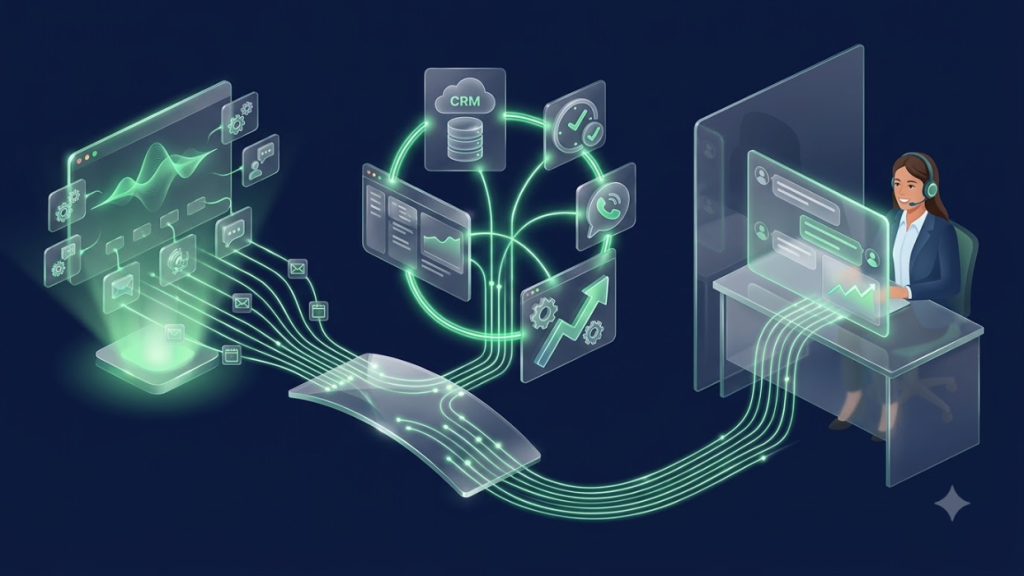
When AI Voice Agents are connected with GoHighLevel, voice conversations can become part of a larger system involving your CRM, appointments, pipelines, and automations. That means the information collected during a call doesn’t have to stay in the phone conversation—it can help drive what happens next.
At the same time, not every conversation should be automated. The best results usually come from combining AI with human support and giving each one a clear role.
If you’re getting started, don’t try to automate every call at once. Choose one clear use case, such as missed-call recovery or appointment booking, test it properly, and expand from there.
Need Help Setting Up AI Voice Agents?
Setting up an AI Voice Agent is about more than simply turning on an AI phone system. The conversation needs to match your business process, customer expectations, and existing GoHighLevel setup.
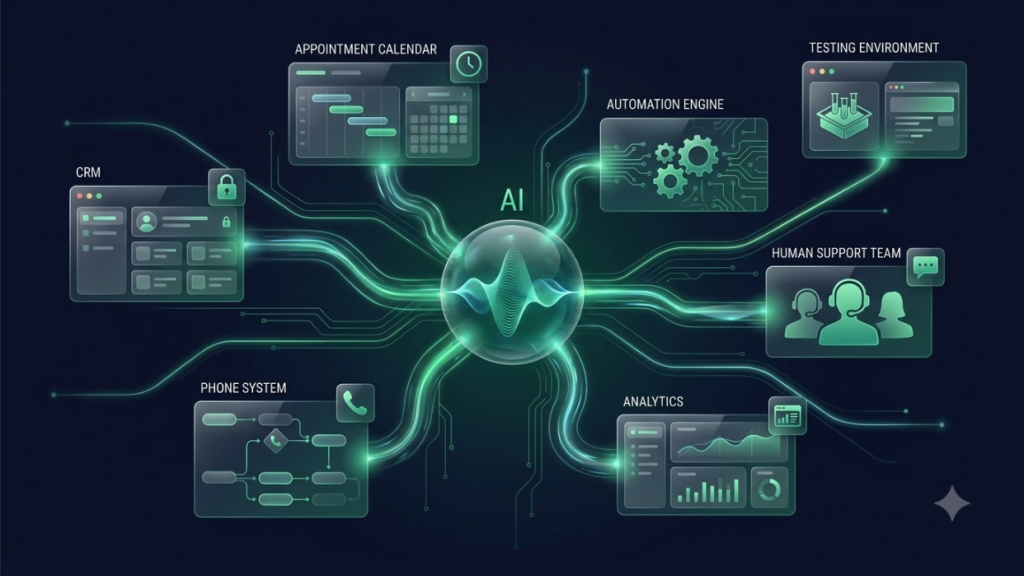
A good implementation starts by identifying which calls should be automated and which should go directly to your team. From there, you can connect the AI with your CRM and automations, create clear human handoff rules, and test different customer scenarios before going live.
Once the system is running, continue reviewing the results and improving the conversations based on real customer interactions. This approach helps you build an AI Voice Agent that supports your team instead of creating another complicated system to manage.